Geographic Clustering Patterns Among Elite Performers in Endurance Versus Precision Athletic Categories Across Multi-Decade Datasets
Sofia Lorenz · Oct 21, 2026
Geographic Clustering Patterns Among Elite Performers in Endurance Versus Precision Athletic Categories Across Multi-Decade Datasets
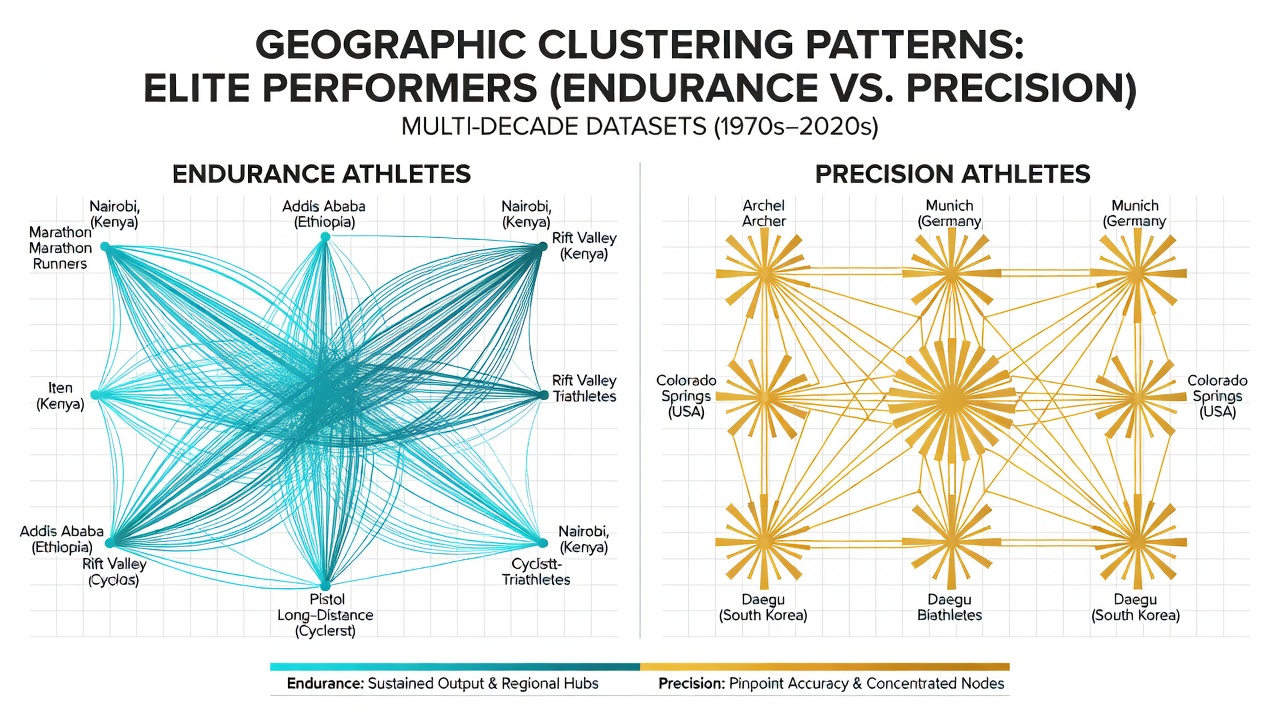
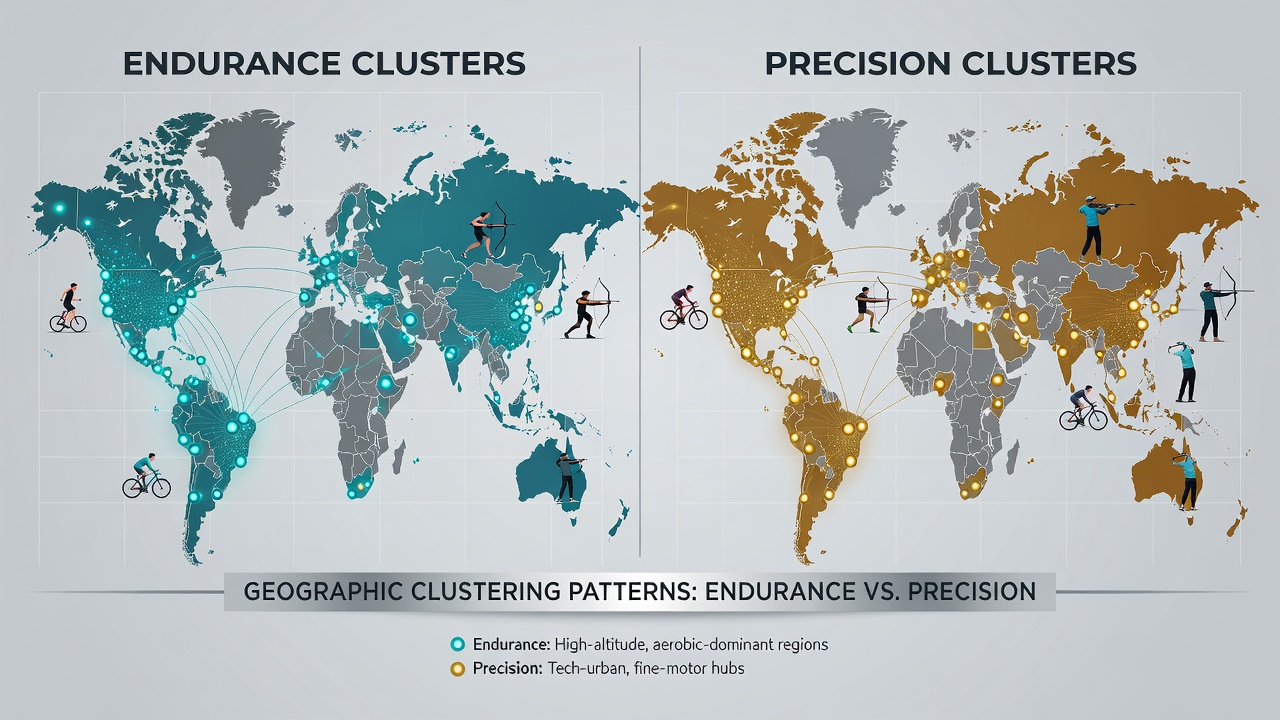
Multi-decade datasets compiled from Olympic records, world championships, and professional circuits reveal distinct geographic clusters where elite performers in endurance and precision sports tend to emerge, and researchers have tracked these concentrations from the 1980s through October 2026 updates. Endurance categories such as marathon running, long-distance cycling, and triathlon show heavy representation from specific high-altitude regions in East Africa and mountainous areas in Europe, while precision disciplines including archery, shooting, and golf display different concentrations across East Asia, Northern Europe, and parts of North America.
Endurance Sports and Regional Concentrations
Data from international athletic federations indicate that runners from Kenya and Ethiopia account for over 60 percent of top marathon finishers in major events between 1990 and 2025, with birthplaces clustering around the Rift Valley highlands at elevations above 2,000 meters. Studies published by the Australian Institute of Sport link this pattern to physiological adaptations from chronic altitude exposure combined with training cultures that emphasize volume and group running, and similar clustering appears in cycling where riders born in the Alps and Pyrenees regions of France, Italy, and Spain dominate Grand Tour classifications across the same period. Multi-decade analysis shows these endurance clusters have remained stable even as global talent pipelines expanded, although participation rates from other high-elevation zones in South America and Central Asia have increased modestly since 2010.
Precision Sports and Alternative Geographic Patterns
Precision athletic categories exhibit clustering in different zones, with Olympic shooting medalists born in Germany, China, and Russia comprising a large share of podium finishes from 1984 onward according to records maintained by the International Shooting Sport Federation. Archery data from World Archery Federation competitions highlight strong representation from South Korea and the United States, where training programs and equipment manufacturing hubs coincide, while golf performance metrics across PGA Tour and European Tour events show elevated success rates among players from Australia, South Africa, and the United Kingdom over multiple decades. Observers note that these precision clusters often align with countries possessing established national coaching systems and indoor training facilities rather than specific terrain features, and datasets updated through 2026 continue to reflect this distribution despite increased international junior programs.
Comparative Trends Across Decades
Longitudinal comparisons between the two categories reveal that endurance clusters formed earlier adn have shown greater persistence, whereas precision clusters have shifted slightly with changes in national funding priorities. For instance, East African dominance in distance events solidified in the 1990s and maintained momentum through 2025, while precision sports saw emerging contributions from Eastern European nations in shooting after 2000 alongside sustained East Asian strength in archery. Researchers analyzing combined Olympic and world championship results from 1980 to 2026 find that endurance performers travel farther from their birth clusters to access professional opportunities, whereas precision athletes more frequently remain within national training infrastructures. What's interesting is how both categories demonstrate minimal crossover, with few athletes achieving elite status in both endurance and precision events across the examined datasets.
Factors Documented in the Data
Analyses of environmental, cultural, and infrastructural variables indicate that altitude and training volume correlate strongly with endurance clustering, whereas access to specialized equipment and repetitive skill practice align with precision concentrations. Government statistical agencies in Canada and the European Union have contributed datasets on youth sports participation that support these associations without establishing direct causation, and academic reviews from institutions such as the University of Queensland have examined how early exposure to specific activities influences later elite pathways. Birthdate distributions within clusters show seasonal variations tied to school calendars and climate, yet overall geographic stability persists across both sport types even as global migration of athletes increases.
Recent Updates Through 2026
Figures compiled in October 2026 from ongoing Olympic qualification cycles confirm that traditional endurance clusters continue to produce disproportionate numbers of top-ranked competitors, while precision categories maintain their established regional strengths with minor additions from Southeast Asia in archery. Performance databases maintained by international federations allow direct comparison of athlete origins across 40 years, and these records show no major disruption to the core patterns despite expanded scouting and development programs in previously underrepresented regions. The data further indicate that socioeconomic factors and national sports policies interact with geographic features to sustain the observed clusters over time.
Conclusion
Multi-decade datasets provide clear evidence of separate geographic clustering for elite endurance and precision performers, with endurance athletes concentrating in high-altitude zones and precision athletes emerging from areas with strong technical training systems. These patterns have held across Olympic cycles and professional circuits through 2026, supported by physiological, cultural, and infrastructural factors documented in research from multiple continents. Continued monitoring of birth locations and performance records will allow future comparisons as participation broadens.